
How To Do Gongfu Tea: A Simple Guide For Chinese New Year
The formal, Zen-rooted and ritualistic Japanese tea ceremony, called chanoyu, receives a fair bit of international attention. After all, the setting is awfully atmospheric—the low tables, the tea ware, the clothing of the professionals brewing, pouring and serving the tea. And then there’s the tea itself—matcha. Vivid green. It’s quite a spectacle.
People across China also engage with a tea ceremony, called gongfu. But where Japan’s is exacting and includes multiple small steps, gongfu is informal. Friends and family sit around a table pouring tea, talking and connecting.
With Chinese New Year upon us now—the Year of the Horse began on Tuesday—let’s explore the Chinese approach toward tea ceremony. It’s much less daunting than the Japanese version—and quite a bit of fun.
How to put together gongfu
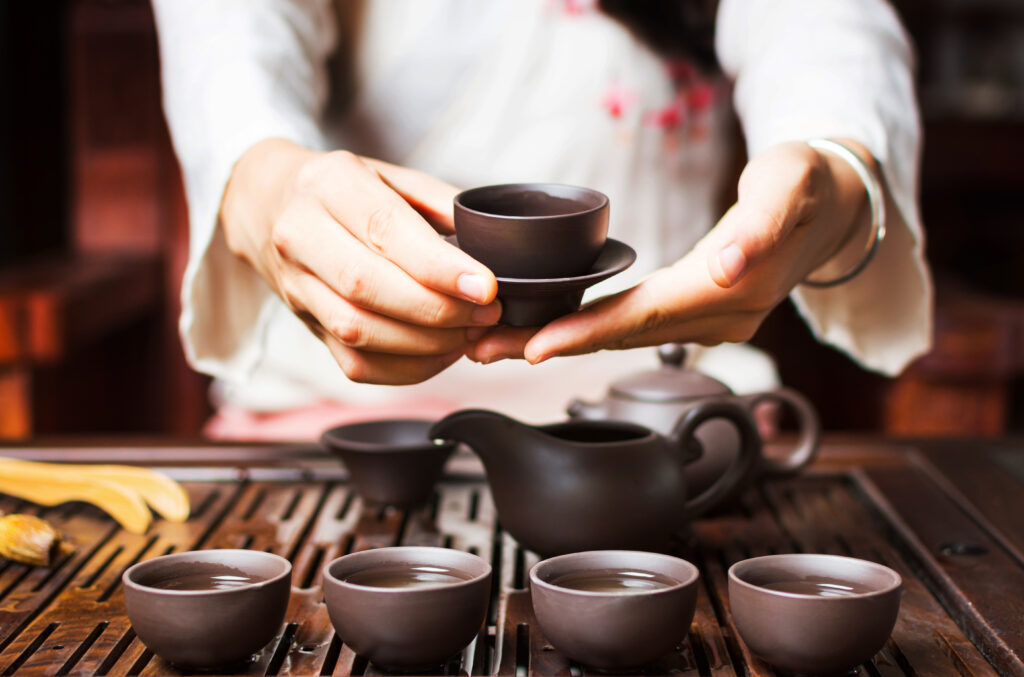
Enjoying tea the gongfu way involves a few accessories, like a permeable tea tray and small cups. But none of the hallmarks of gong-u demand large investments. There’s nothing fussy or precious about gongfu. The goal is to offer friends and family an ideal way to share tea, and to savor its complexities together.
Steps include:
- Pick a tea that loves multiple short steeps (oolong and pu-erh are classics, but most Chinese teas will work splendidly)
- Grab a gaiwan, which is a vessel designed explicitly for gong-fu, or a small tea pot. Even a heat-safe mug can work in a pinch.
- Use small cups for sipping, including the kinds we sell at Ku Cha House of Tea. But specific cups are not necessary—use espresso cups, juice glasses, whatever you’ve got.
- Boil water, then let it sit for a minute so it’s hot-but-not-scorching.
- Warm your pot and cups with a quick splash of hot water, then pour it out.
- Add more tea than you think you need (gong-fu likes a generous handful for a small vessel).
- Do a quick “wake-up” rinse: pour hot water over the leaves and immediately pour it off (optional, but helpful).
- Steep briefly—think like 10 to 20 seconds, not minutes. Then pour the tea off the leaves completely, for each round. If your pot doesn’t have a built-in strainer, use a small mesh strainer (or even a fork held at the teapot spout) so the leaves stay put while the tea goes into the cups.
- Serve everyone, then steep again. Use the same leaves. Sippers will notice—the tea tastes different for the second brewing. Same goes with every other brewing for this session of gong-fu.
Anybody can brew tea the gongfu way
That’s the essence of gongfu. Easy! In China most people own tea tables—fairly small wooden tables with slats on top and a basin beneath. As gongfu involves so much pouring, tea tends to spill. The tray contains all of the tea that doesn’t make it into the cup. The tray, however, is not necessary to enjoy gong-fu!
You can bet Chinese people around the world now are hosting gongfu get-togethers with particular energy. For one thing, Chinese New Year just got started. For another the Year of the Horse suggests the year ahead will deliver a bounty of energy and action—there’s nothing sedate or tentative about horse years!
Happy Chinese New Year!
Gongfu Teas: Silver Needle White
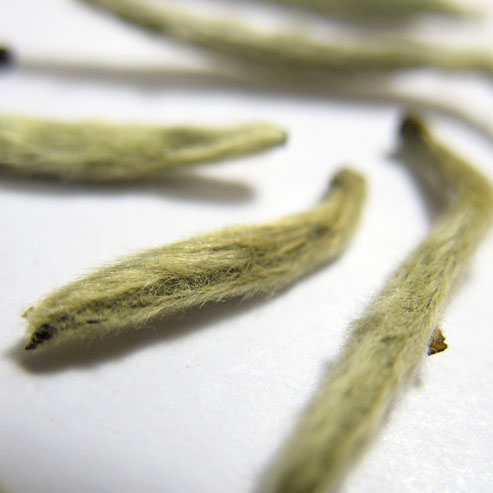
This classic white tea stands as a perfect gong-fu choice. Silver Needle, also known as Bai Hao Yin Zhen, undergoes a meticulous process before it reaches market. Tea farmers hand pick the delicate tea buds in early spring, and then fan them out to dry in the sun. After that, they lightly fire the tea over charcoal at low heat, which finishes drying the tea while preserving its beautiful silver color. Silver Needle ranks as the sweetest of white teas. It will coat your mouth with a clean, honeyed smoothness. During multiple brewings, the flavors transform. Production is limited—it’s not to be missed!
Gongfu Teas: Oriental Beauty Oolong
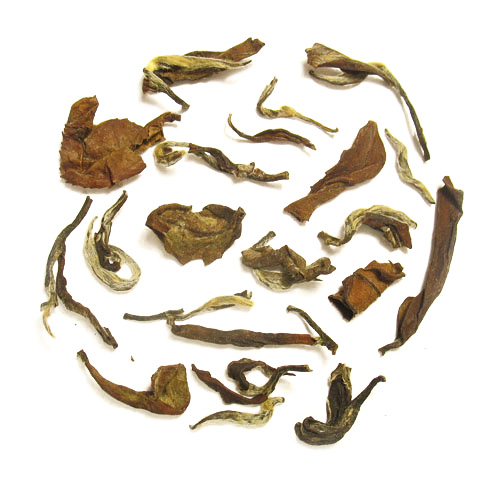
This tea could be famous just for its remarkable flavor. But there’s more behind its renown that how it makes people swoon with each sip. Here’s the scoop—insects nibble the tea plants in this region of Taiwan, Mount Ali. Instead of destroying the tea, the insects feasting actually enhances the flavor! The leaves, which suggest fall foliage, get harvested in summer. Once picked, tea artisans then oxidize them to between 50% and 60%, which is more than other Taiwanese oolongs. The result is a tea with a smooth and sweet flavor. Astringency is barely perceptible and its aroma broadcasts notes of ripe peaches and honey.
Gongfu Teas: Gu Yun Ripe Pu-erh
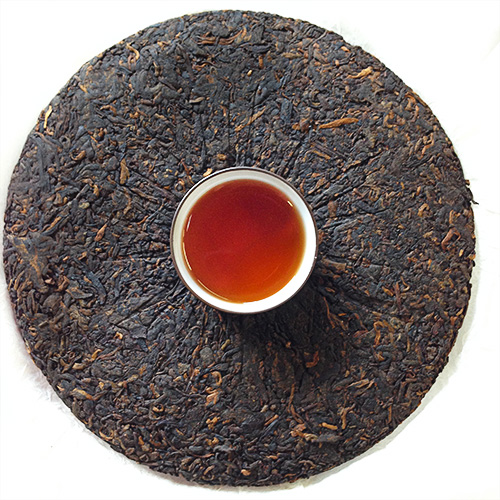
Gu Yun, which means “ancient atmosphere,” is Ku Cha’s signature ripe pu-erh cake. It’s awfully special. Hailing from Yunnan Province’s Menghai County, where ancient tea mountains are abundant, this tea produces an earthy brew that simultaneously yields sweet, clean sipping experiences. Tea lovers champion fermented ripe pu-erh for many health benefits, including lowering of cholesterol, reducing blood lipids, detoxing, weight management and more. Perfect for multiple brewings, gongfu style!
Gongfu Teas: Tiger Mountain Raw Pu-erh
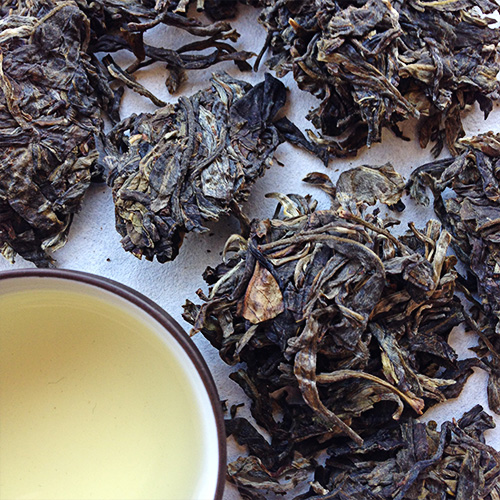
This famous pu-erh yields potent “cha qi,” or tea energy. Perfect for the Year of the Horse! The tea comes from Tiger Mountain (naturally) in Yunnan Province’s LinCang County. Made from the leaves of wild tea trees—highly unusual!—Tiger Mountain brews bright and complex, with bittersweet notes and a noticeable pear fruitiness. This Tiger Mountain, from 2017, is wonderful now (pu-erhs are famous for aging). In fact, it will continue to evolve in good ways with further aging.
