
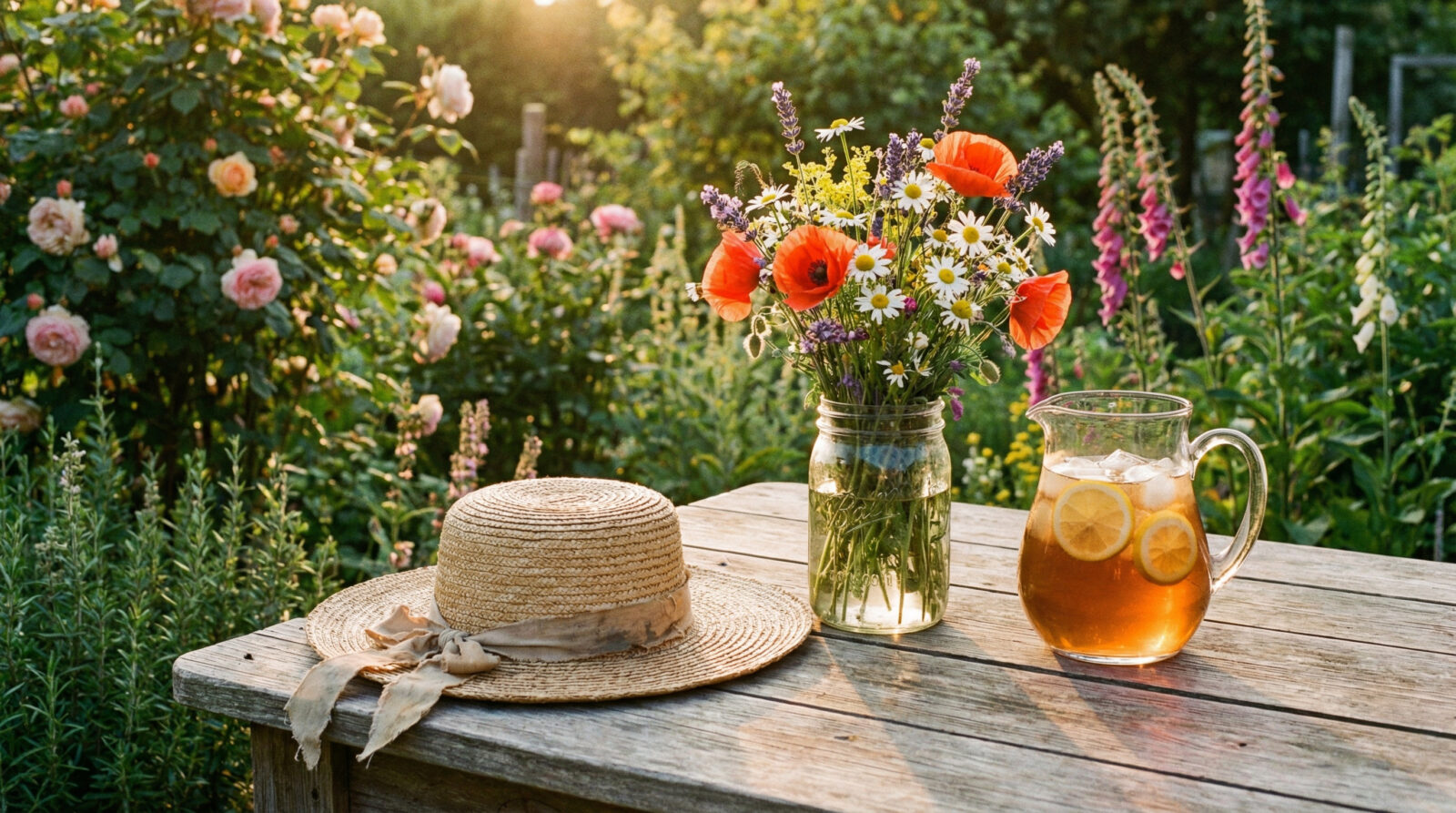
Summer Tea Care, Plus Four New Midsummer Blends
The heat is on, readers. And swelter is not exactly sweet news for tea—our favorite botanical prefers cool temperatures. Heat can degrade its quality. As many of you have air conditioning, however, that may not be a problem. And either way, Colorado evenings are cool, and the heat waves don’t normally persist for long.
The bigger threat to your tea quality? Light and air.
Light accelerates the breakdown of chlorophyll and catechins, both of which are largely responsible for much of Camellia sinensis’s flavor and health benefits. Tea that has been degraded due to light turns dull in color and might develop “off” flavors—papery, flat, hay-like. Light also flattens the volatile aromatic compounds that make tea such a pleasure to brew. Those heady perfumes that rise in steam? Light can diminish them quite a bit.
Oxygen is vital for tea production—it is a key factor in determining whether a tea is green, white, oolong, black or pu-erh. Tea farmers control the amount of oxygen that gets introduced to tea leaves—the most for black, the least for green. After that, it is important for tea consumers to protect tea from additional oxygen, as it can dull flavors and aromas.
Ku Cha’s Japanese tea tins are meant for your kitchen
Ku Cha House of Tea’s standard sacks do a wonderful job preserving freshness—they block light, and mitigate the introduction of oxygen. But we also offer a range of decorative canisters that go a step further to protect your tea. These gems are hand-decorated with colorful Japanese Chiyogami paper.
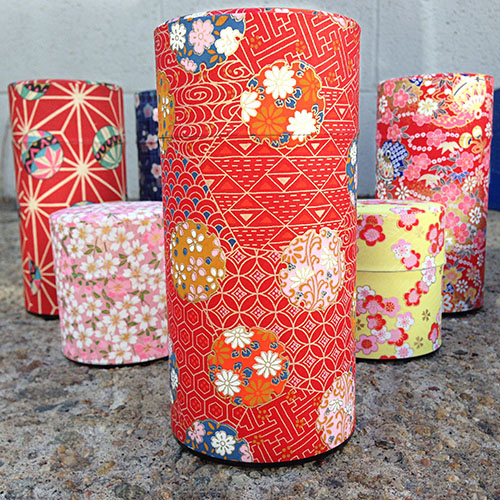
Artisans have been crafting Chiyogami, also known as Yuzen Washi, since the Japan’s Edo period (1603-1867) by printing woodblock designs onto sturdy washi (paper made from fibers like kozo and mitsumata). Rich kimono textiles inspired our line of Chiyogami-wrapped tins.
These tins make grand gifts—and that includes presents you give to yourself! You’ll love keeping your favorite teas in these tins, which will further protect and preserve the botanicals that make your favorite beverage. You can store them in a drawer with the rest of your tea, of course. But they’re beautiful—you’ll find places to put them on display in the kitchen.
Midsummer Teas: Midsummer Mate
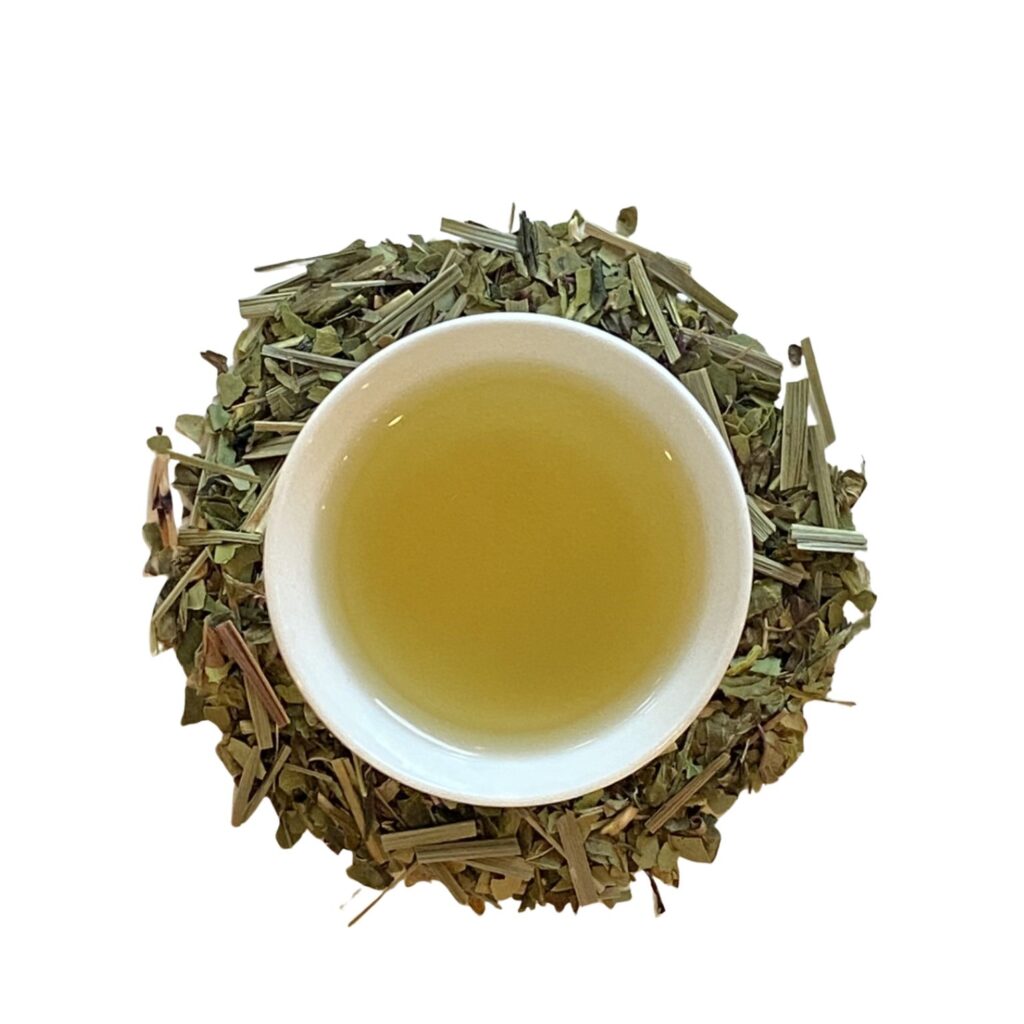
We love mid-summer pick-me-ups—especially when they come electric with bright flavors like peppermint and lemongrass. For our Midsummer Mate, we rely in part on delicious yerba mate for the energy part of the equation—the South American shrub serves as one of the few in the world that contains caffeine. But we appreciate the addition of green tea to this blend. The splash of Camellia sinensis delivers some welcome grassy notes, as well as more caffeine zip.
Midsummer Teas: Cape Town Medley Rooibos
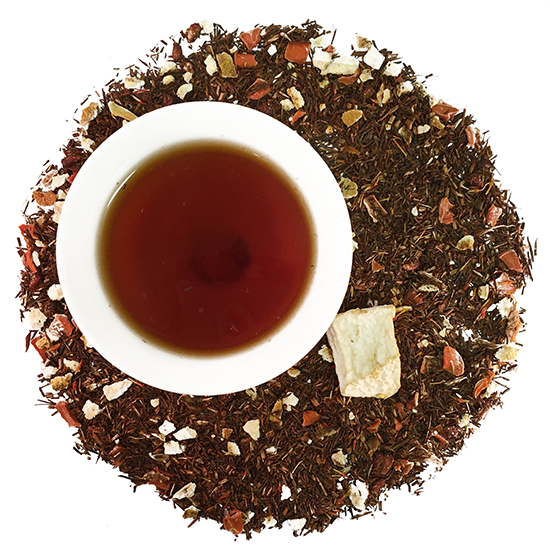
Summertime is rooibos time! Well, we think it’s a year-round kind of thing, but rooibos does help satiate thirst—and thanks to Colorado’s intense dry heat in the summer, we thrill to beverages that quench that constant thirst. This gorgeous treat adds pomegranate, pomelo, orange, carrot and safflower to the blend, for a flavor explosion. Pro tip: Batch cold-brew this and keep it in the fridge across the hot months.
Midsummer Teas: Grilled Peach Black Tea
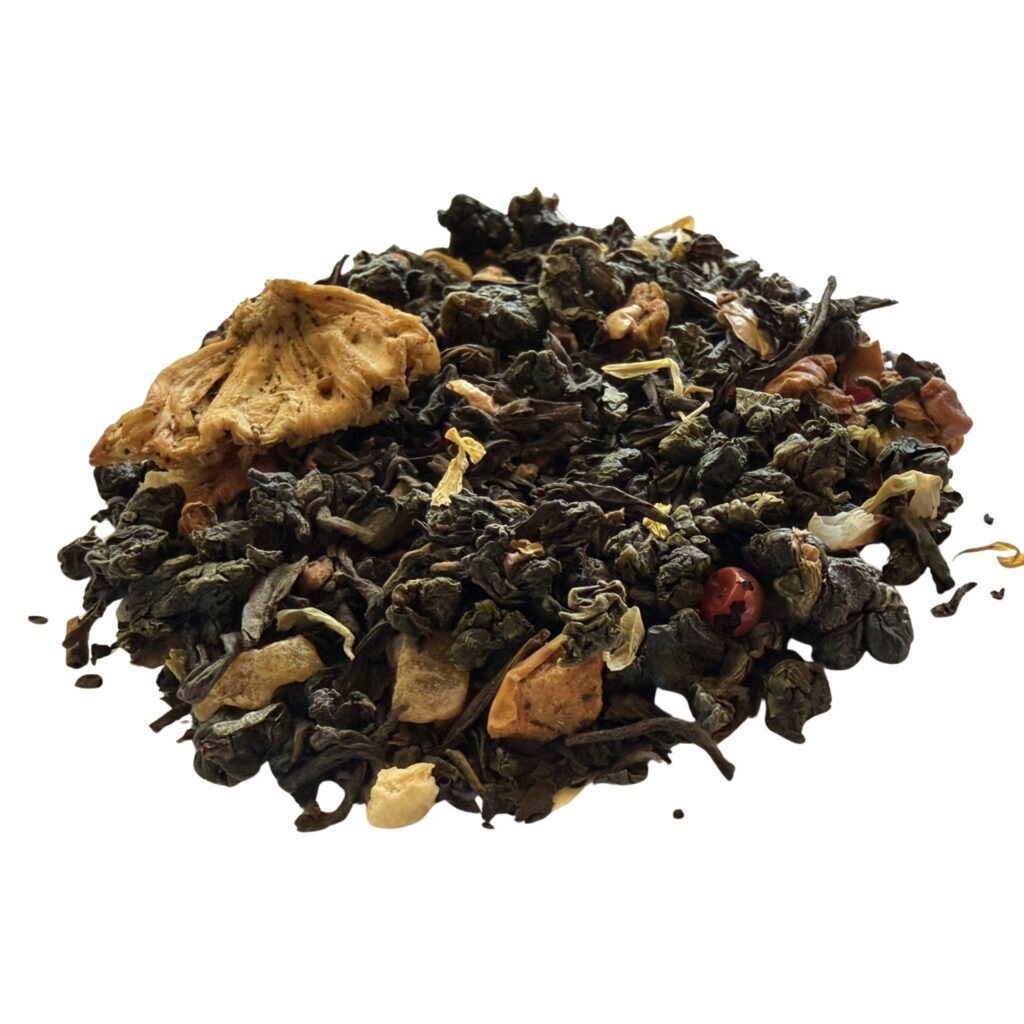
Iced tea. Peach. A pair of summer classics, fully on display with this newish blend. It’s quickly become a Ku Cha favorite. This treasure leads with oolong—a favorite style of Camellia sinensis. To that we add black tea—a touch more caffeine, a bit more flavor oomph—along with real peach for the key flavor ingredient. Pineapple, mango, black and pink peppercorn, peach blossom, calendula and sunflower round out this delight.
Midsummer Teas: Crab Claw Pu-erh
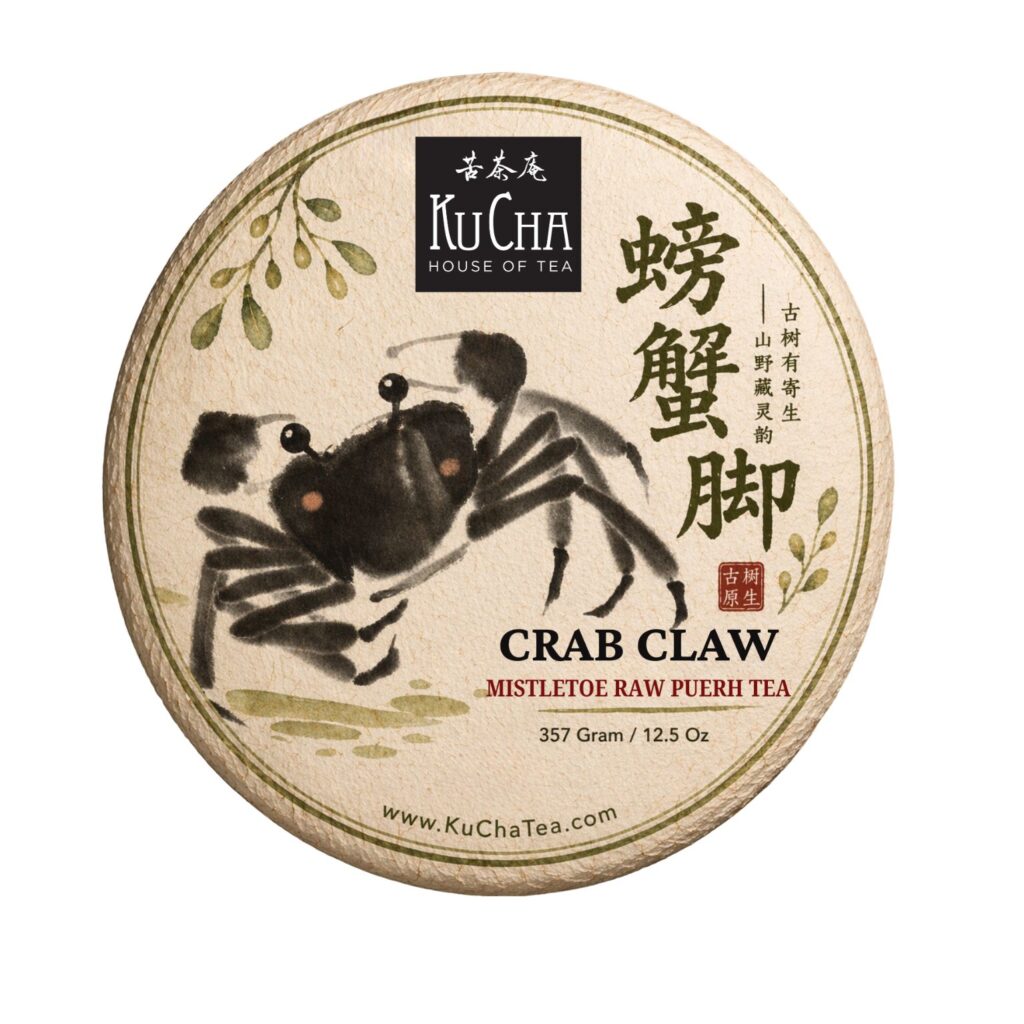
Here comes a new one for Ku Cha—pu-erh blended with the Asian herb Crab Claw, Viscum articulatum! People in China and elsewhere in Asia incorporate into tea blends this parasitic plant, which frequently grows on ancient tea trees in Yunnan, China, and the Himalayas. The plant delivers a clean, fresh, woody, and nutty flavor profile. In addition, antioxidants flood its leaves. When combined with the fermented tea raw pu-erh it offers a cooling and refreshing cup with lasting hui gan (sweet aftertaste) that is reminiscent of wild honey. Crab Claw’s health benefits also include strong anti-inflammatory properties, and assistance for digestion, immune vitality, cardiovascular support and gut health.
