
Before Coffee, Before Apple Pie: Tea Built America
Smoke from backyard grills will meander through neighborhoods all weekend. The July 4 holiday is here, and that means barbecue-perfumed gatherings.
This year’s national observance comes with especially energetic jazz hands—the United States turns 250 on Saturday! Happy Birthday!
As passionate tea merchants and evangelists, we thrill to tea’s close connection to the nation’s birth. After all, the Boston Tea Party, on December 16, 1773, served as an important spark for the ignition of the War of Independence.
Tea lands early in America
Tea first arrived in the American colonies in 1647, when Peter Stuyvesant brought green tea from China to the New World. Colonists prized it. In the Dutch colony of New Amsterdam—in what today we know as Lower Manhattan—people served it in the best silver strainers, using fine porcelain cups and pots, and wooden tea caddies.
By the early 1700s, colonists were boiling more than one million pots of loose-leaf tea a year—averaging 10 pounds per person annually, more per capita than any other nation on earth.
By the time of the Boston Tea Party, Camellia sinensis was even more American than apple pie, even though the country did not grow the plant. So when colonists tossed more than 92,000 pounds of tea from three ships, to protest a British taxation scheme that hinged on tea, the plant wasn’t a curiosity; it was central to American life.
Green tea dominated American tea sipping until the 1920s
While most Americans drank green tea back then—in fact, green predominated until the 1920s— more black than green teas larded the Boston Tea Party ships. The British were essentially trying to dump less popular tea into the Americas, and then tax it.
Of the five teas heaved into the sea, three were black teas from China’s Wuyi Mountains, one was a prized spring-harvested green from Anhui Province, and a lesser green also from Anhui got tossed.
One of the Wuyi teas, called Bohea, was pronounced “boo hee”—a corruption of the name for Wuyi. It became slang for tea. When people said they wanted a pot of boo-hee, they meant tea. We think it’s pretty cool that in the 17th century people in the American colony referred to China’s Wuyi Mountains when they talked about tea!
Back then, colonists didn’t really distinguish between blacks, oolongs and greens. Teas were either black or green. The “black” teas from the Wuyi Mountains were really more like oolongs.
Less than a decade after the U.S. begins, a trade ship heads to China, for tea
Prior to the Tea Party, many Americans had already boycotted tea, thanks to British taxation. Immediately after, the boycott grew more profound; drinking tea was seen as un-American in the wake of the Tea Party.
But in 1784, the first American trade ship to China set sail from New York, with 242 casks of New England and Appalachian ginseng—a root widely celebrated in China as a potent health tonic. When the ship, the Empress of China, returned, it carried tea. A decade later, tea consumption in the U.S. reached 3 million pounds. And the tea, most of it green, predominantly hailed from Anhui and Fujian Provinces.
Not until the 1920s did Americans pivot from green to proper black teas, a transformation spearheaded by British tea growers in India. That trend intensified during WWII, when tea shipments from China and Japan got shut off. Americans then turned to India for tea, and by the end of the war, 99 percent of tea in America was black.
Today, consumption of green tea is anticipated to grow at a 6.27% CAGR between 2026 and 2031—a healthy upward trajectory. But market share remains far behind black: 84% of Camellia sinensis sipped today in the U.S. is black, and 15% is green (the rest is mostly oolong and white).
Tea in America represents a much more complex and compelling story than most people realize. Its role stretches back deep into Colonial history and serves, in part, as combustion for the American Revolution.
We think now it’s time to start sipping some of the kinds of teas that colonists dumped during the Boston Tea Party.
Happy 250th Anniversary to the United States!
Independence Day Teas: Da Hong Pao
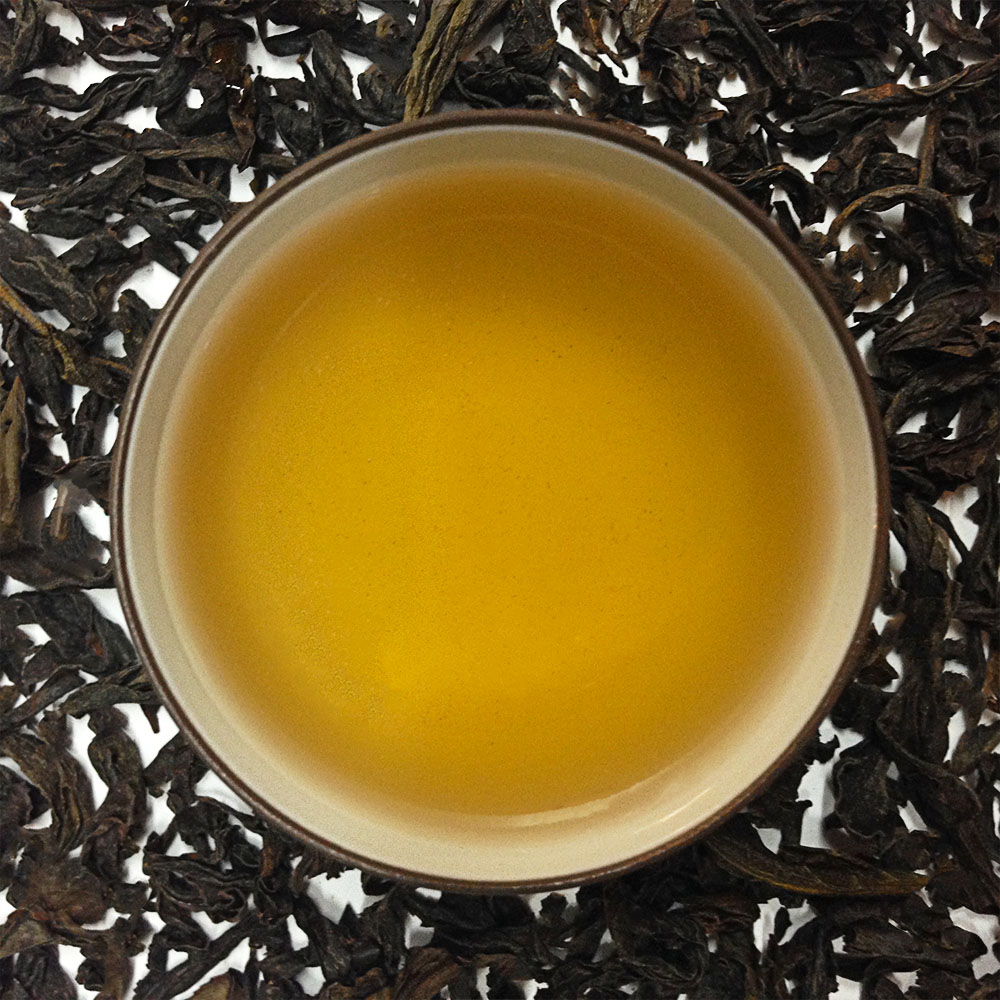
Teas from the Wuyi Mountains were so important to colonists—their shorthand for tea was boo-hee, meant to sound like Wuyi. We can think of no better Wuyi Mountains tea to celebrate American independence than Da Hong Pao, also known as “Big Red Robe.” It’s the most famous rock oolong from the WuYis, and we like how it’s got the word “red”—a flag color. This tea is famous for its strong fragrance, rich, roasted flavor and pleasant, lingering sweetness.
Independence Day Teas: Golden Eyebrow
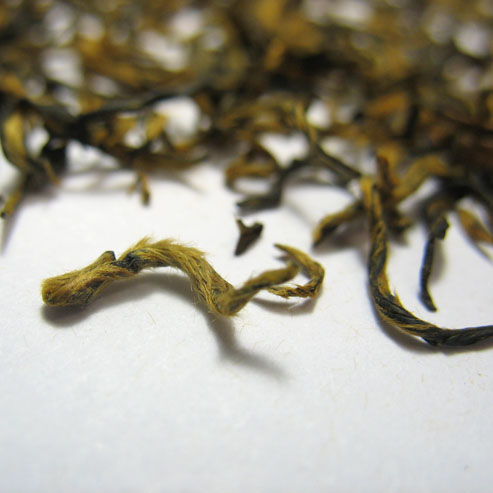
One of the black teas tossed into Boston Harbor was called Congou, from Fujian Province. The English word comes from “gong-fu,” which in Chinese means skill, discipline and craftsmanship. The closest tea we have to Congou is Golden Eyebrow, a high-quality black tea from Fujian. This beautiful tea brews smooth and rich, with a lingering sweetness reminiscent of honey.
Independence Day Teas: Lapsang souchong
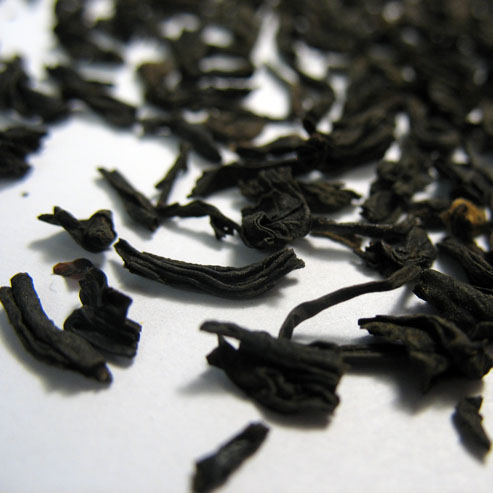
The British ships in Boston Harbor carried 10 chests of souchong tea, from Fujian Province. Souchong is a kind of tea plant, rather than a style. The charcoal drying process used to craft souchong created a slightly smoky flavor. But souchong fostered the emergence of another drying method, using pine wood. And that style—lapsang souchong—is much smokier. It’s famous, too.
We carry a wonderful lapsang souchong, a brew that broadcasts profound campfire vibes. Interestingly, today some tea artisans in Fujian have returned to the old, less smoky method. The pine forests surrounding the areas where lapsang souchong is traditionally made are now protected. And this version tastes more like what colonists would have savored.
Independence Day Teas: Keemun Monkey
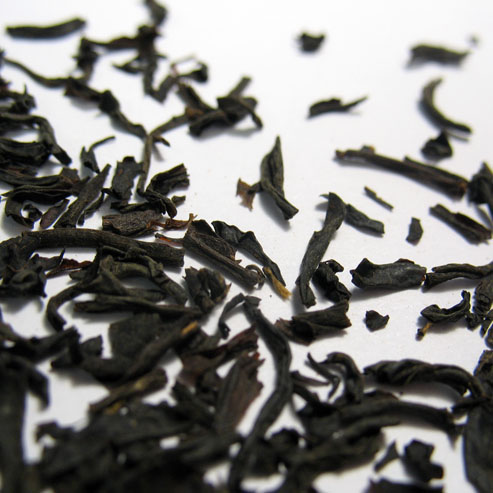
Some of the tea chucked into the sea by colonists came from Anhui Province. Which leads us straight to Keemun Monkey, one of our favorite black teas. Keemun Monkey brews a translucent rust color and tastes smooth and rich, with nutty and malty undertones and a refreshing aftertaste. The Anhui tea at the Boston Tea Party was green—back then all Anhui teas were green. Our Keemun Monkey comes from tea plants that traditionally were cured into green teas—only in this case, it gets the black tea treatment.
Independence Day Teas: Gunpowder Green
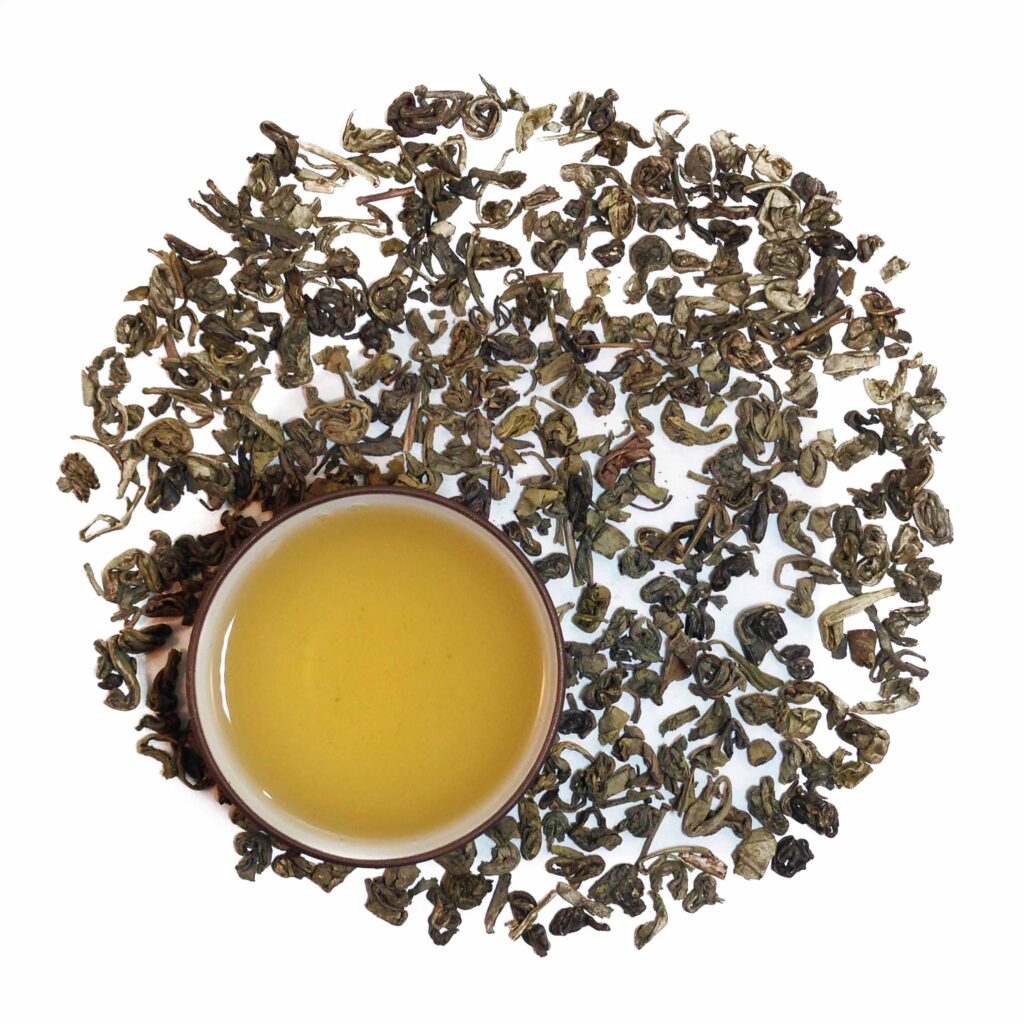
The ships contained green tea, but not the gunpowder style. So why include it? Gunpowder became the dominant green tea in the years after the Revolutionary War, after the U.S. established its own direct trade with China. General stores across the country stocked it through the 19th century, and Civil War soldiers carried it in their packs. The tea commanded powerful attention through much of America’s 300-year green tea tradition that held until WWII broke it. So this didn’t go into the harbor—but it did become what Americans drank for more than 150 years after it became a nation.
We think it belongs—and wow is it special. Also known as Zhu Cha or Pearl Tea, artisans roll it into small, round pellets which look similar to gunpowder. Fittingly, it also offers robust flavor and invigorating energy, with subtle smoky notes. It represents a perfect everyday morning tea—one with deep American roots!
